Good oral care is not about doing something dramatic once. It is about small, repeatable habits that fit into an ordinary day. This guide walks through the basics in plain language so you can build a routine that feels manageable and keep it going.
Nothing here is a diagnosis or a personal treatment plan. Think of it as background reading that helps you make sense of your own routine and ask better questions at your next dental visit.
Why a simple routine works
The mouth is busy all day. A soft, sticky film called plaque forms on teeth as a normal part of life, and food and drinks come and go. A daily routine is simply a way of resetting that balance on a regular schedule, so buildup does not get too comfortable.
Consistency tends to matter more than intensity. A gentle routine you actually follow every day usually beats an aggressive routine you abandon after a week.
Brushing basics
For most people, brushing gently twice a day is the anchor of a routine. A soft-bristled brush and a light touch are usually the goal, since pressing hard may contribute to irritation at the gumline rather than a cleaner result.
- Angle the brush toward the gumline and use small, gentle movements.
- Give each area a little time rather than rushing across everything.
- Replace a brush or brush head once the bristles look worn.
If you use a fluoride toothpaste, that is a common part of many routines. Your dentist can help you choose what suits your individual needs.
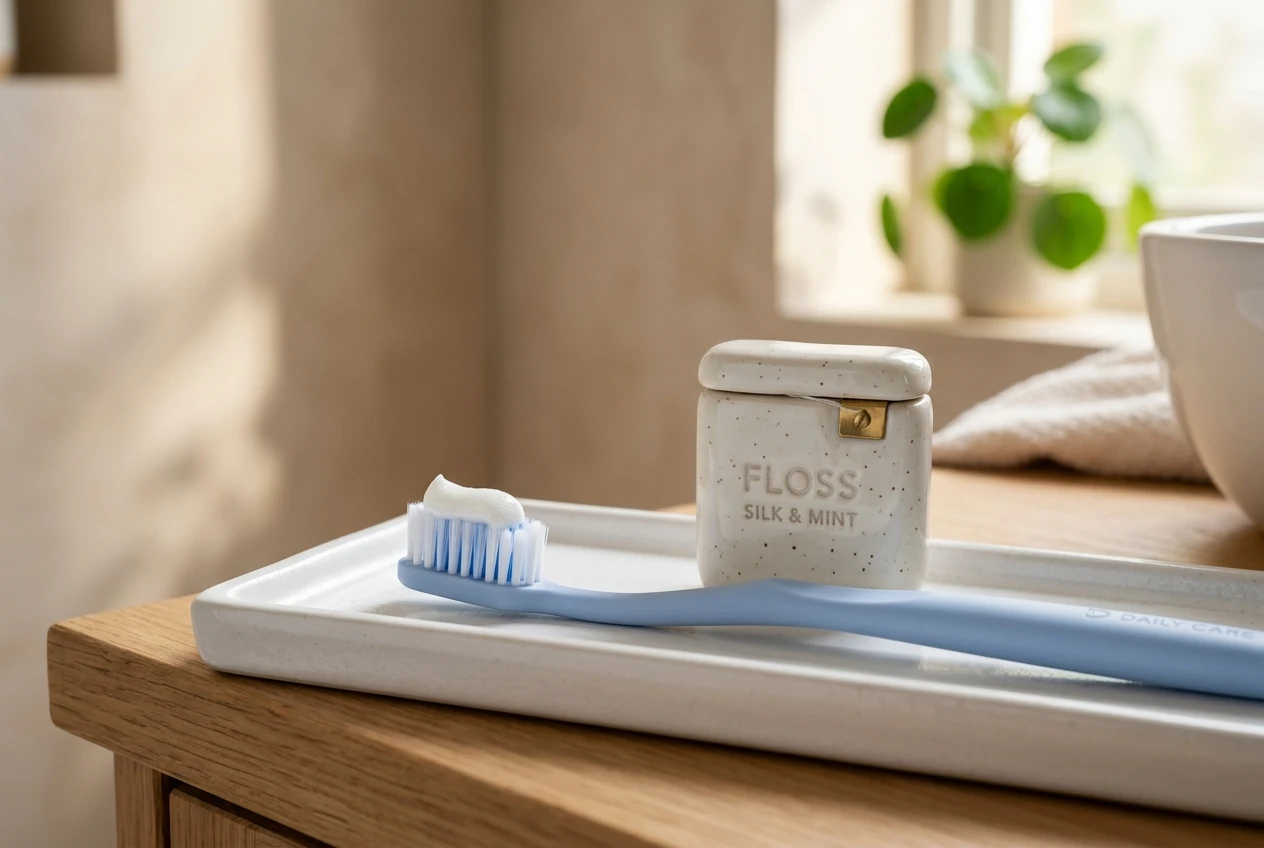
Flossing and cleaning between teeth
Brushing cleans the broad surfaces, but the spaces between teeth need their own attention. This is what flossing, interdental brushes, or picks are for. The best tool is the one you will actually use each day.
The goal is not perfection on day one. It is a routine you can repeat without thinking too hard about it.
Cleaning between teeth can reach places a brush may miss, which is why it is often paired with brushing rather than treated as optional.
Where rinses and extras fit
A mouth rinse can be a helpful addition for some people, but it is generally an addition rather than a replacement for brushing and cleaning between teeth. The same goes for tongue cleaning and other extras: useful for some routines, not mandatory for everyone.
Food, drinks, and timing
Everyday choices play a part too. Frequent acidic drinks and all-day snacking give buildup more chances to form, so timing can matter as much as the item itself. Water between snacks and grouping treats with meals can be part of a daily routine. You can read more in our overview of food and oral health.
Preparing for a dental visit
Routine visits are a chance to review your care and ask questions. Jotting down anything you have noticed, such as occasional sensitivity or a spot that feels different, makes the appointment more useful. This is about starting a conversation, not self-diagnosing.

Key Takeaways
- A gentle, consistent routine beats an intense one you cannot keep.
- Brush gently twice a day and clean between teeth daily.
- Rinses and extras are additions, not replacements.
- Timing of food and drinks can matter as much as the choice.
- Bring questions to routine visits; discuss ongoing symptoms with a dentist.
Sources and further context
This guide reflects widely shared, general oral-health education. It is written for a general audience and is not a clinical reference.
- General consumer oral-health information from major public-health and dental organizations.
- Dental Inside editorial explainers on teeth and enamel, gums and the gumline, and daily oral care.
Dental Disclaimer: This guide provides general dental education only. It is not a substitute for professional dental or medical advice, diagnosis, or treatment. Individual needs vary. Always discuss ongoing symptoms with a qualified dentist.